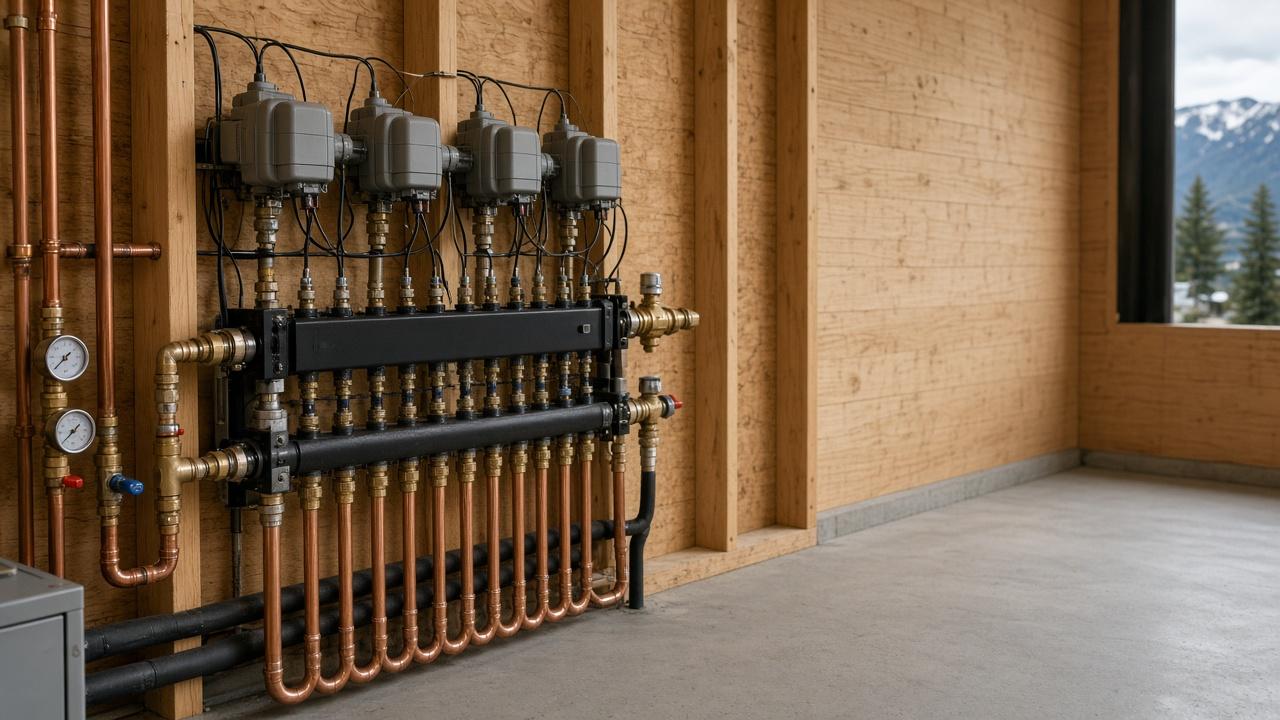
Hydronic Heating Installation in Vancouver
Whole-home hydronic heating systems designed and installed for maximum comfort and efficiency.
Hydronic heating — hot water circulated through baseboards, radiators, or in-floor tubing — is the dominant residential heating system in older Vancouver homes and the preferred choice for new high-performance construction. It offers more consistent comfort than forced-air, doesn't degrade indoor air quality, and integrates naturally with radiant floor heating.
Installing a hydronic heating system from scratch is a multi-trade project: boiler sizing and installation, piping design, zone valve or zone pump configuration, thermostat wiring, and integration with domestic hot water. Our certified technicians design and install complete systems, not just the boiler.
We serve homeowners across Greater Vancouver who are converting from forced-air or electric baseboard, expanding existing hydronic systems, or building new homes with hydronic heat from the ground up.
What Hydronic Heating Installation Involves
System Design & Zone Layout
A hydronic system design starts with the room-by-room heat load. Zones are defined by exposure, occupancy patterns, and temperature requirements. A properly zoned home lets you heat occupied areas without heating unoccupied ones — this is where hydronic systems pull ahead of forced-air in energy performance.
Boiler Selection for Hydronic Systems
Hydronic systems use a dedicated boiler (not a hot water tank). For residential systems, wall-hung condensing gas boilers are standard. We size the boiler based on the total connected load with appropriate safety factor — typically 1.15-1.2× design load. Modulating-condensing boilers adjust output to match actual demand, which is particularly effective in hydronic systems.
Primary-Secondary Piping
Larger or multi-zone hydronic systems use primary-secondary piping to decouple the boiler circuit from the distribution circuit. This allows modulating boilers to operate at their most efficient condensing setpoints regardless of what the distribution is doing. We design headers, low-loss separators, and buffer tanks where the application requires them.
Baseboard & Panel Radiator Installation
Hot water baseboards are sized for the room's heat loss at the design supply temperature. Fin-tube baseboard (the most common type in BC) is specified by BTU/ft at the operating temperature. We size and install baseboards to achieve design temperatures on the coldest days without running supply temperatures so high that condensing efficiency is lost.
Zone Controls & Thermostat Integration
Each zone gets a dedicated thermostat, a zone valve or zone pump, and end-switch wiring back to the boiler controls. We integrate modern programmable or smart thermostats (Ecobee, Honeywell T6, Nest) with boiler demand signals. Outdoor reset is configured to automatically adjust boiler setpoints based on outdoor temperature.
Technical Details
Design water temperature for baseboard systems typically ranges from 160–180°F supply, 140–160°F return in older systems. Low-temperature systems (radiant floor, low-temp radiators) operate at 85–120°F — enabling deeper condensing boiler efficiency.
System water velocity should be maintained at 2–4 ft/second in distribution piping to prevent erosion while ensuring heat transfer. Undersized piping causes noise and poor distribution; oversized piping causes sludging.
Air elimination is critical in hydronic systems — air pockets cause noise, poor heat distribution, and corrosion. We install automatic air vents at high points and a primary air separator on the boiler circuit.
Hydronic system balancing ensures equal flow to all zones. We install balancing valves on zone returns and use flow meters to verify design flow rates are achieved.
Oxygen diffusion through PEX tubing (in open systems) causes accelerated corrosion of ferrous components. Systems with PEX distribution require oxygen-barrier PEX-b or sealed system design with appropriate inhibitor.
Frequently Asked Questions
What's the difference between hydronic heating and radiant floor heating?+
Can I add zones to my existing hydronic system?+
How long does a hydronic heating installation take?+
Is hydronic heating more expensive to install than forced-air?+
Hydronic Heating Installation Across Greater Vancouver
Vancouver Boiler Installation Co provides hydronic heating installation services across the entire Lower Mainland. Whether you're in Vancouver proper, Burnaby, Richmond, or out to Langley and Maple Ridge, we connect you with a certified technician in your area.